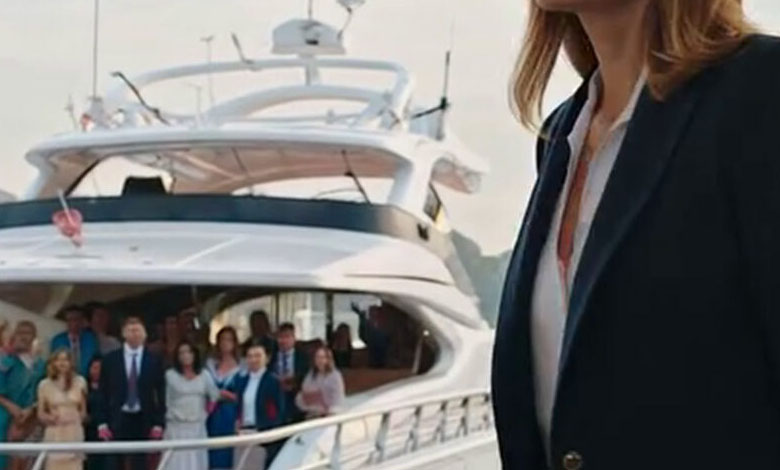
Part One – Erased
I was banned from my own family’s yacht trip without a conversation, without warning—quietly erased.
My name was taken off the guest list and replaced like I’d never existed.
But the worst part wasn’t the exclusion.
It was how long I’d convinced myself it was accidental.
How many times I sat at their tables thinking I belonged, only to find out I’d never even had a seat.
And when the staff greeted me with, “Welcome aboard, owner,” I laughed.
Because it was true.
But why did that truth shake them more than the lie ever did?
It all unfolded here in the United States—between our glass-and-granite kitchen in Los Angeles and a sleek white yacht moored in Newport Beach, California, drifting out across the Pacific.
I always start my mornings slow.
A cup of coffee in my favorite ceramic mug—the one with the small crack near the handle I never bother to replace. The kitchen window lets in just enough Southern California sun to make the granite counters gleam.
My husband, Lyall, had already left for a client meeting, leaving behind a faint trail of aftershave and a half‑eaten banana.
I was scrolling through my phone, mostly out of habit, thumbing through emails and calendar alerts, when I noticed a post from my niece. A boomerang—one of those looping video snippets—of a champagne toast. Clinking glasses. A yacht in the background.
The caption read: “Family getaway tradition loading. Can’t wait to set sail.”
My thumb froze mid‑scroll.
The annual Preston family yacht trip.
It had been a Preston tradition for years, one I had been invited to exactly twice since marrying Lyall.
The first time, I made the mistake of suggesting we rotate destinations.
The second time, Valora—my sister‑in‑law—made it painfully clear I was a guest, not family.
I clicked into the post, then another.
Faces I knew.
Valora’s tight‑lipped smile.
Her husband, Tom, the twins.
Opal, my mother‑in‑law, holding a mimosa.
Lyall’s younger cousin with his fiancée.
Everyone except me.
There was a family group chat: “Preston Legacy Voyagers.” Lyall had added me a few years ago, then quietly removed me after an incident with a dinner seating chart. Long story.
I checked anyway.
No chat. No messages. Not a single email about the trip.
I stared at my phone, the coffee cooling beside me. My pulse wasn’t racing. Not exactly. It was something worse:
Stillness.
A sinking confirmation that this wasn’t a mistake.
It was deliberate.
That afternoon, while rinsing out a glass in the kitchen sink, my phone buzzed with a message from Valora.
But it wasn’t meant for me.
It was a screenshot of a group text. A photo of the finalized cabin assignments. Under Portside Guest Rooms, a name had been crossed out.
Mine.
Next to it, in neat letters: Confirmed for Belle.
Belle. Valora’s yoga instructor. The one who’d once asked me if I was Lyall’s assistant.
The next message was a voice note.
Valora’s voice, mid‑laugh:
“Well, at least the energy on board won’t be so tight this year.”
Tight.
I set the phone down without responding. My hands were steady, but my jaw ached from clenching.
At dinner that evening, I didn’t mention it right away.
Lyall was distracted, scrolling through stock alerts between bites of salmon.
“Did you know your family’s planning another yacht trip?” I asked lightly.
He glanced up. “Yeah, Mom mentioned it last week. I think they’re still finalizing the list.”
I tilted my head.
“Am I on the list?”
He frowned and put down his fork.
“Of course. Why wouldn’t you be?”
I smiled just enough to keep the tension from rising.
“Just curious.”
He went back to his phone.
“I’ll double‑check,” he murmured.
He wouldn’t.
He never did.
After dinner, I washed the dishes by hand, one by one. The sound of running water filled the silence.
It’s funny how silence can say more than shouting.
That night, I lay in bed staring at the ceiling fan blades slicing through the air. Over and over, my mind replayed every moment I’d been quietly pushed out.
Birthdays with no invitation.
Brunches I found out about from Instagram stories.
Conversations that stopped when I entered the room.
I wasn’t naïve. I didn’t expect warmth from Valora.
But this—this was deliberate.
The worst part? No one would say it out loud.
No one had to.
At some point, you stop asking why they don’t include you.
You start asking yourself why you kept trying to belong.
Before I turned off the bedside lamp, I pulled my journal from the drawer and wrote one sentence in steady ink:
Watch. Don’t react yet.
The next morning, I woke up to a text from Valora.
It was one of those messages that sounded polite if you didn’t read between the lines and cut like a blade if you did.
“Hey, Marjorie! Just realizing we may have missed reserving a spot for you on the yacht. Totally my oversight. The trip filled up quicker than expected this year. So sorry! Hope we can catch up after.”
There it was.
Her signature blend of sweet poison.
Short. Chirpy. Coated in emojis and passive apologies.
No room for conversation.
No offer to fix it.
Just a casual admission that I had been erased, dressed up as a logistical slip‑up.
I didn’t respond.
I couldn’t trust my fingers not to betray the composure I was clinging to.
I reread the message, then closed my phone and got dressed.
My plan had been to go to the farmers market that morning. Instead, I sat at the kitchen counter, still in jeans and a sweater, drinking coffee that had long gone cold.
Mid‑morning, an email popped into my inbox from the charter company.
Cancellation confirmation. Cabin release successfully processed.
I blinked, opened it, read it again.
The request had been logged three days prior.
Name of the requester: Valora Preston.
So that’s how she wanted to play it.
I stared at the screen, the edges of my vision blurring a little—not from tears, just from the sudden pressure building behind my eyes.
I forwarded the email to myself, then printed it.
One copy, crisp, clean.
I slid it into a manila folder I kept in my bottom drawer labeled “Tax + Property.”
It would get a new label soon.
By the time Lyall got home, the sun had dipped low enough to throw long shadows across our living room floor.
He kicked off his shoes and dropped his keys into the ceramic dish by the door like it was any other Thursday.
I waited until he grabbed a beer from the fridge before speaking.
“Valora texted me,” I said.
He took a sip and leaned against the counter.
“Oh yeah? What about? The yacht trip?”
“She says she forgot to reserve me a spot.”
He frowned, clearly caught off guard, but not exactly shocked.
“Really? That seems… odd.”
“She called it a miscommunication.”
“Huh.” He took another drink. “Maybe it was just that. You know how chaotic those things get. Everyone’s trying to coordinate.”
“It wasn’t a miscommunication,” I said calmly. “I got a cancellation email. It was submitted by her three days ago.”
He didn’t look at me right away. Just swirled the bottle in his hand like it might show him a smarter response.
“I mean, maybe she thought plans had changed or that we weren’t coming. We—”
He exhaled. “I’m just saying, let’s not assume the worst.”
“She replaced my name with someone else’s, Ly,” I said quietly. “That’s not an assumption. It’s a receipt.”
He stayed quiet.
And in that quiet, I heard everything I needed to.
Later that evening, after he retreated to the den to zone out to ESPN, I sat at the dining room table and opened my laptop.
I didn’t look up old texts or memories. I didn’t scroll through past photo albums, hoping to see myself smiling in some long‑forgotten group shot.
Instead, I opened a new note and titled it:
“Things she’s done that I let slide.”
The list flowed faster than I expected.
Forgot to include me in Rachel’s bridal shower email chain.
Sent the group Christmas itinerary without my name. Twice.
“Accidentally” tagged the wrong Marjorie in a family Facebook post and left it up for days.
Scheduled brunch the day after telling me they were taking a break from gatherings.
By the time I finished, my jaw ached again. Not from anger this time, but from clarity.
Right before I was about to shut my laptop, another message came through.
Not from Valora.
From her assistant.
Someone I didn’t know personally, but who had once emailed me about catering options.
Attached was a screenshot. Another group message thread, most likely meant for a different recipient.
“Valora, don’t worry. She’s not coming. I handled it.”
I handled it.
I don’t know how long I stared at those four words, but when I blinked, the room was darker. The clock read past ten and Lyall was still in the den, pretending none of this existed.
I stood up, crossed the kitchen, and reached for the manila folder. I added the email and the screenshot printout, then closed it with care.
This wasn’t about a cabin.
It never was.
I sat on the edge of my bed, folder in my lap, staring at the word “Cancellation” printed in sharp, emotionless font across the top of the yacht company’s email.
I had read it so many times that the ink felt etched into my eyes.
But the truth wasn’t in the email.
It was in everything that came before it.
The yacht wasn’t just a boat, not to me.
It was the first thing I ever bought that no one handed to me.
No one helped me with.
It was mine.
Born from five years of late nights, skipped vacations, and rejections from U.S. investors who said things like,
“You’ve got a great smile, but we’re going with someone more aggressive.”
They meant male. They just didn’t say it.
Back then, I ran deliveries myself when drivers quit last minute. I walked into meetings in heels with no cushion, wearing secondhand blazers that I had steamed in gas station bathrooms off I‑5.
And through it all, I kept telling myself:
You don’t need their validation. Just build the thing. Make it real.
When the company finally turned a profit—and not a little one, but the kind that makes those same investors crawl back with sheepish grins—I didn’t buy a designer bag or a car.
I bought that yacht.
Quietly. Without fanfare.
I still remember signing the check. My hand didn’t even shake. There was a strange calm, like I had finally stepped into a version of myself I’d been trying to prove existed.
And yet, legally, I had put Ly’s name on the ownership papers, too.
“It makes tax stuff cleaner,” our accountant had said. “Better for trusts, easier down the road.”
Down the road, indeed.
Because within months, the yacht became part of the family lore.
But not my part of the family.
No. It was Lyall’s yacht.
The Preston family’s sea legacy.
Valora’s exact words at one of the last family brunches I was still invited to.
I remember how she lifted her glass and said:
“It’s so meaningful to have traditions tied to something we own as a family. It makes our legacy feel tangible.”
She turned to me briefly, eyes tight.
“And how wonderful that Marjorie supports it.”
Supports it.
Like I was some event planner.
Not the reason it existed.
That memory alone might have been forgettable if it weren’t part of a pattern.
Valora had always taken credit for ideas I planted in passing conversation. Recipes that ended up in her blog. Design tips she later claimed were from “a friend.” Even charity events I coordinated but she presented like the queen of altruism.
Each time, I told myself it wasn’t worth making a fuss.
Pick your battles, I used to say.
But when someone steals your voice long enough, you stop recognizing your own.
A few days ago, a memory popped up on my phone. An old clip from a lifestyle podcast Valora did. She sat on a white lounger, hair curled to perfection, sunglasses resting on her head.
“The yacht is more than a place,” she told the host, smiling. “It’s where my family connects. It represents our continuity, our name, our story, our legacy.”
It hit me harder than I expected.
This wasn’t about me being excluded from a trip.
It was about being written out of something I built.
They weren’t just keeping me off the boat.
They were cutting me from the narrative altogether.
And I had helped them do it—by not correcting people. By letting Lyall speak for us. By staying quiet when people said things like,
“So nice of you to come along this year.”
By nodding when Valora handed out roles and titles like she was distributing parts in a high school play, always keeping me in the background.
I got up from the bed, opened the bottom drawer of my dresser, and pulled out every document I’d tucked away over the years.
Ownership papers.
Bank wires.
The original yacht catalog I had marked up with notes.
I laid them out across the bed.
It looked like evidence in a trial I hadn’t planned to prosecute—until now.
There was no outburst.
No tears.
Just a low, simmering resolve that started somewhere near my collarbone and pulsed downward like a steel thread tightening inside me.
“You tried to disappear me,” I whispered, running a finger over the inked signature that proved otherwise.
“Now watch.”
Part Two – Legacy and Receipts
They streamed the dinner live.
I didn’t even have to search for it.
Valora’s profile was already flagged in my notifications, a leftover setting from when I once tried to be part of the family’s digital life. It popped up while I was folding laundry, the audio playing before I even realized what it was.
Laughter echoed in the background. Glasses clinking. A long table covered in gold‑rimmed plates and eucalyptus runners stretched across a candlelit room.
The caption read:
“Preston family dinner—so grateful for legacy and love.”
I stood there holding one of Lyall’s button‑downs like it had betrayed me.
There they were. All of them.
Opal, beaming from the head of the table.
Valora in her usual center‑of‑attention seat.
Her husband and the twins.
A few cousins I hadn’t seen in years.
And Ly’s aunt, who always claimed she didn’t like boats.
Apparently, she’d changed her mind.
No one had mentioned this dinner to me.
Not a text. Not a call.
It wasn’t just an oversight.
It was orchestration.
Opal stood to make a toast. Her tone was soft, practiced.
“When we gather like this,” she began, “I’m reminded of what makes our family unique. It’s not just tradition. It’s the people who carry that tradition with intention.”
Heads nodded. Cameras panned.
She continued, eyes glossy with what might have passed for sentiment—if you didn’t know how rehearsed it always was.
“We only bring those who understand what this legacy truly means. Those who add to it, not subtract.”
That line.
That carefully delivered little knife.
I paused the video, rewound, watched it again.
We only bring those who understand what this legacy truly means.
Not a name mentioned.
Not a finger pointed.
But everyone who mattered—everyone who followed her—would know what it meant.
Who it excluded.
And there was Lyall, sitting quietly, sipping wine.
That night, I waited until he was out of the shower.
He came into the bedroom in flannel pants and a T‑shirt with some faded college logo, hair still damp.
I clicked play on the video.
He stood there watching, arms crossed, his face unreadable as the words flowed from his mother’s mouth.
When it ended, I looked at him.
“She really said that,” I murmured.
He rubbed his jaw.
“Valora likes theatrics. You know that.”
“I’m not sure that’s the defense you think it is,” I replied.
“She was probably just trying to sound thoughtful. It’s just a dinner.”
“No,” I said. “It’s a statement. And you didn’t say a word.”
“I didn’t write the speech, Marjorie.”
“But you sat through it.”
His silence wasn’t defensive.
It was something worse.
Resigned.
I nodded.
I didn’t scream. Didn’t cry.
I just absorbed the shape of his indifference.
Later, alone in the kitchen, I made tea I didn’t drink and pulled out a box of keepsakes we never unpacked when we moved.
At the bottom, I found an old invite to Rachel’s baby shower—the one they claimed must have gotten lost.
I remembered calling Valora that day, asking for the address.
She’d laughed and said:
“Oh, that’s this weekend? I totally thought you weren’t in town.”
I had been.
I’d sent the gift weeks before.
I held that envelope like it was evidence—not of a crime, just of a history I could no longer pretend wasn’t deliberate.
The next morning, I printed Valora’s speech transcript from the live stream. I highlighted the sentence about those who understand legacy.
I slipped it into the folder with the rest.
Then I typed a message.
“I hope your speech felt honest. We’ll see how it holds up in person.”
I hit send.
No emojis.
No explanation.
Just the message.
She’d know what I meant.
That afternoon, I booked a car to Newport Beach.
I didn’t pack a bathing suit.
I didn’t pack for a vacation.
I packed documents.
Copies.
Receipts.
I packed truth.
Because I wasn’t just showing up.
I was taking my seat back.
It wasn’t the kind of packing you do with sunscreen and sandals in mind. I didn’t even glance at my swimsuits.
I laid out each document with surgical care.
Bank transfers.
Email confirmations.
Ownership papers.
A highlighted transcript of Valora’s thinly veiled dinner speech.
Each page slid into a sleeve and then into the folder that now held more truth than anyone on that yacht trip would be ready for.
I chose a simple navy dress. Neutral, professional, not glamorous.
This wasn’t about fitting in anymore.
It was about stepping in.
Downstairs, the smell of coffee met me before the kitchen light did.
Lyall was already flipping through news alerts on his phone, a plate of dry toast untouched next to him.
He looked up as I entered, his eyes skimming the edges of my determined silence.
“Did you sleep?” he asked.
I sat across from him.
“Enough.”
We both watched the coffee drip into the pot, the sound filling the space between us—steady, unrelenting.
“I’m heading to Newport tomorrow,” I said.
He blinked.
“That soon?”
“I booked the car.”
He set his phone down.
“Marjorie, look, I get that you’re upset, but—”
“No,” I cut in calmly. “I’m not upset anymore. I’m done pretending this is confusion or oversight. It’s not.”
He rubbed his temple, sighing.
“Do we have to escalate this? Can’t we just talk to them?”
“They made it loud,” I said. “I’m just responding in kind.”
Lyall leaned back in his chair.
“I don’t want to choose between you and my family.”
“You don’t have to,” I replied. “But you do have to stop pretending they’re not doing what they’re doing.”
His mouth opened, then shut again.
And that was answer enough.
I stood, poured myself a cup of coffee, and left his apology unfinished.
By late afternoon, I found myself at the dining table again, flipping through years’ worth of moments I’d ignored.
The baby shower with no invite.
The group photo at Opal’s birthday where I was cropped at the shoulder.
The Thanksgiving dinner where I was assigned a seat at the overflow table, while Valora’s hairdresser sat up front.
It had always been obvious.
I just hadn’t wanted to believe it.
That’s the thing about subtle exclusion.
It teaches you to gaslight yourself before anyone else has to.
As the sun started slipping behind the rooftops, my phone buzzed with a text from Jen, a mutual friend on Ly’s side.
“Hey, thought you should see this.”
Attached was a screenshot of the yacht’s pre‑boarding guest manifest.
Ten names listed.
Mine wasn’t among them.
I stared at the screen.
The heading read:
“Confirmed Cabin Assignments.”
Valora had not only ensured my removal, she’d done it officially.
Professionally.
She wasn’t just hoping I’d skip the trip.
She was betting on it.
I replied to Jen with a simple:
“Thanks.”
Then I opened the family group chat—the one I hadn’t spoken in for months—and typed:
“I’ll see you in Newport. I trust there will be room.”