My Billionaire Grandpa Flew 6 Hrs For My Brother’s Wedding—Mom Sat Him By Trash, Slapped Me. Then…
I’m Emily, and I’ll never forget the day my family tried to erase both me and my grandfather in front of hundreds of guests. My billionaire grandpa William flew 6 hours across the country just to see my brother Michael’s wedding. At 82, his body was frail, but his pride was unshaken. Yet the moment he arrived, my parents shoved him behind the trash cans like a discarded guest instead of the man who built our name.
My mother’s voice sliced through me. “That old beggar will embarrass us.”
I felt fire in my chest. When I spoke up, her hand cracked across my face. Gasps spread like wildfire. And before I could catch my breath, she ordered me out. I stumbled toward the gates, humiliated, tears burning my eyes.
Twenty minutes later, I heard the thunder of engines. And when his private jet landed, everything changed.
The spring sun over Napa Valley was too bright, almost mocking me as I walked toward the vineyard gates. My heels clicked against the cobblestones, echoing louder than I wanted, each step reminding me I didn’t belong here. Rows of olive trees framed the path, roses wound around the arch, and waiters glided past carrying trays of champagne. I wasn’t offered a glass—not once.
I caught my reflection in one of the polished glass doors. My forest green dress hung awkwardly on me, secondhand from a thrift shop back in Boston. My hair was loose, a little wind-tossed, freckles peeking through the makeup I hadn’t bothered to reapply. In a sea of designer gowns and tuxedos, I looked like an intruder.
“Emily.”
The voice froze me. My mother, Linda, approached with that measured, predatory smile she wore at social functions. Her eyes swept over me—shoes, hemline, neckline—like she was grading damage.
“Decent?” she said finally, lips curling as though the word was an insult.
“That’s all you’re going to say?” I asked quietly, my throat tight.
She leaned closer, perfume sharp enough to sting. “You RSVP’d alone. Don’t make me regret letting you in.”
Then she swept away, laughing a little too loudly with a guest in sequins. I stood rooted, my hands clenching my clutch. I hadn’t expected a hug, but not even a nod, not even a simple, “I’m glad you came.”
Then I saw him—my brother, Michael, the golden child. He was surrounded by his college friends near the olive trees, one arm looped around Olivia, his fiancée. The other wrapped lazily around a glass of amber whiskey. His laughter carried across the patio, bright and effortless, while I stood invisible.
“Michael,” I called, forcing a smile.
He glanced my way, eyes flicking over me like I was a stranger asking for directions. “Oh, hey, Em. You made it.”
His words were flat, perfunctory, already shifting his gaze back to his friends. Olivia’s gaze followed mine for a moment. Ivory lace clung to her like it was stitched onto her skin, her smile tight, polite, uninterested. Heat crept up my neck. I wanted to turn and run, but something rooted me there—something stubborn. This was my family, broken as they were, and I refused to vanish so easily.
So I stayed at the edge of the gathering, clutching my bag, pretending to search for someone who cared. But the truth settled heavy in my stomach: I was just a guest at my own family’s celebration, and maybe not even that.
And then, through the laughter and champagne clinking, I heard the rumble of tires on gravel. A dark town car slowed to a stop near the gates. My heart skipped when I saw the door open.
Grandpa William had arrived.
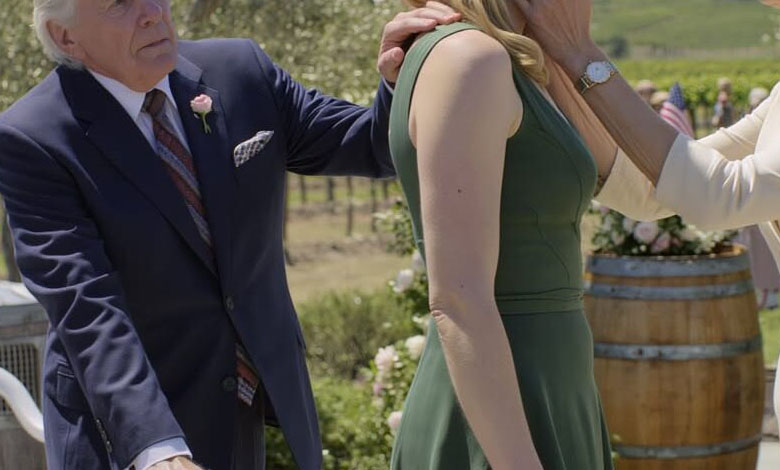
The car door opened slowly, and there he was—Grandpa William. His back was a little hunched, his steps deliberate, but his eyes, sharp blue, lit up when they found me. He wore a dark navy suit that hung a little loose on his frame, a tie slightly crooked, and shoes polished just enough to show he’d tried. At 82, he shouldn’t have traveled this far, but he did for Michael.
“Emily,” he rasped, his voice rough but steady. “You’re the only one worth flying for.”
My throat closed. I rushed forward, wrapping my arms around him. The faint smell of peppermint gum and aftershave clung to his jacket. For a moment, the noise of the wedding faded, and it was just us—me and the only person in this family who still saw me.
But when I looked around, no one else moved. Not my father, Richard, who was pretending to be fascinated by the wine list. Not my mother, who stood polishing her bracelet in the sunlight. Not even Michael, who didn’t so much as wave.
A staffer appeared suddenly, clipboard in hand. “This way, sir,” he said briskly, gesturing toward the far side of the patio.
I started to follow, but then froze. The path curved past the flower arch, past the fountain, past the outdoor kitchen, and ended at two flimsy plastic chairs wedged between overflowing trash bins. The hum of the catering vents drowned out the string quartet’s music. My chest went tight.
Kitchen supplies
“Excuse me,” I called after the staffer. “There must be a mistake.”
He checked his chart, shrugged, and walked off.
I turned to my mother, who stood not 20 ft away, sipping champagne like it was oxygen. “Why is Grandpa sitting there?” I demanded.
She didn’t even blink. Her gaze slid past me like I wasn’t worth her time. Finally, she muttered, “He insisted on coming. I told him he wouldn’t enjoy himself. Beggars can’t be choosers.”
My fists curled. “He’s not a beggar.”
Her lips tightened. She stepped closer, her whisper as sharp as glass. “That old man will embarrass us. The way he talks, the way he eats, the way he smells. I won’t have him ruining Michael’s day.”
I stared at her, searching for any crack of humanity, but found none. Her face was taut, her eyes cold. She wasn’t even pretending anymore.
I glanced at Grandpa. He sat quietly on the plastic chair, shoulders slouched, pretending not to notice the trash or the pitying glances from strangers. His hands rested on his cane, knuckles pale. It felt like a punch to the gut—my grandfather, the man who had built everything this family owned, discarded like garbage at his own grandson’s wedding.
And I knew then silence was no longer an option.
I could feel my pulse pounding in my ears as the waiters began ushering guests to their tables. Crystal glasses clinked, laughter floated across the vineyard, and yet all I saw was my grandfather, 82 years old, sitting beside trash bins like an afterthought. My hands trembled, but I stood. I wasn’t going to let this pass.
I tapped my fork against a glass, the delicate ting slicing through the chatter. Conversations died. Dozens of faces turned toward me.
“Excuse me,” I said, my voice trembling at first. I took a breath, straightened my shoulders. “I just have one question.”
I looked directly at my parents, my words louder now. “Why is my grandfather seated by the trash bins while strangers sit at the family table?”
Gasps rippled through the crowd. A few guests exchanged nervous glances. Others leaned forward, curious.
Then—heels clicking like gunshots—my mother stormed toward me, her eyes blazing. “You ungrateful girl!” she hissed.
Before I could flinch, her hand struck my cheek with a sharp crack. The sound echoed across the patio like a whip. My skin burned instantly, but it was the humiliation that stung worse. A collective gasp spread through the room. Someone dropped a fork. Another whispered, “Did she just—?”
I staggered back, clutching my face. The world tilted for a second, but I refused to cry. Not here. Not in front of them.
“You don’t belong here,” my mother spat, her voice venomous. “You never did. Get out before you embarrass us even more.”
She snapped her fingers at a nearby staffer. “Escort her out.”
I swallowed hard, forcing my chin up, even as my vision blurred. “All I did was ask for respect for him,” I whispered, pointing toward Grandpa William.
But no one moved to defend me. My father looked away, suddenly fascinated by his cufflinks. Michael shifted uncomfortably but didn’t speak. Olivia leaned closer to him, whispering, her expression unreadable. The staffer hesitated, eyes flicking between me and my mother. My mother’s glare hardened. And finally, he stepped forward.
“It’s fine,” I said quickly, my voice steady despite the ache in my throat. “I can walk myself out.”
I turned, heels catching on the gravel, skirt dragging against the dusty stones. The crowd parted in silence, a hundred eyes on me. Shame wrapped itself around me like a second skin.
Behind me, my mother’s voice carried cold and clear. “Ungrateful, just like her grandfather.”
I didn’t look back. I couldn’t.
But as I reached the edge of the patio, I felt movement. Grandpa William had risen from his chair. Slowly, painfully, he walked toward me. He pressed something into my palm—a green silk handkerchief, frayed at the edges, embroidered with the letter E. I closed my fingers around it. My cheeks still burned from the slap, but his gesture felt like a promise. And for the first time that day, I wasn’t entirely alone.
I sat on a low stone wall at the edge of the vineyard, clutching Grandpa’s handkerchief in my fist so tightly the embroidery dug into my skin. The sting from my mother’s slap still pulsed across my cheek. But worse was the silence—hundreds of eyes watching me walk away like I was the disgrace. The music and laughter carried faintly from the patio. I could almost convince myself I’d imagined it all until the sound reached me.
A low rumble, steady, heavier than any car engine I’d ever heard.
At first, I thought it was thunder rolling over the valley. But then the ground beneath my heels trembled. I squinted toward the gravel road that curved behind the vineyard, shielding my eyes from the sun.
That’s when I saw it.
A sleek black Rolls-Royce glided into view, its paint catching the golden light of late afternoon. Two black SUVs followed close behind, engines humming in perfect sync. The cars slowed, moving like a procession—deliberate and powerful.
I froze.
The air shifted. Even the birds seemed to stop.
The Rolls-Royce stopped just yards away. A uniformed chauffeur stepped out with quiet urgency, hurrying to the rear door. He pulled it open, and out stepped Grandpa—not the frail, hunched man who’d shuffled from a town car an hour earlier.
No. This was William Hail, billionaire founder of Hail Vineyards, the man whose name was whispered in wine auctions and industry boards.
His suit was perfectly tailored this time, navy fabric sharp against his frame. His shoes gleamed like mirrors. Sunglasses shaded his eyes, but the set of his shoulders was unmistakable—straight, confident, unyielding. Two men in dark suits flanked him, their movements crisp, scanning the grounds with practiced eyes. Security.
My mouth fell open.
“Grandpa,” I whispered, barely able to breathe.
He spotted me instantly, paused, slid off his sunglasses with a deliberate motion. His eyes—clear, steady, familiar—met mine.
“Well, sweetheart,” he said, voice strong, nothing like the raspy tone he’d used before. “Ready to shake things up?”
I stood slowly, clutching the handkerchief tighter, my heart hammering against my ribs. “What? What’s going on?”
He offered me his arm, lips curling into a tight smile. “Let’s see if your brother remembers who actually owns this land.”
My knees almost buckled. “Owns this land?” I repeated, stunned.
The security men moved toward the side gate—the same gate I’d been shoved through in shame moments earlier. This time, the staff didn’t block them. One even held the gate open, his eyes darting nervously to Grandpa.
I swallowed hard, slipped my hand through Grandpa’s arm, and let him lead me forward. My heels crunched against the gravel, but I didn’t stumble. Not this time.
With every step, the truth pressed harder against my chest. This wasn’t a rented venue. This was his vineyard. His empire. And suddenly, I realized I was about to watch the world I thought I knew unravel in front of everyone.
The music from the reception hall drifted out through the open patio doors as Grandpa and I stepped through the side gate. Guests were mid-toast, glasses raised, laughter mingling with the notes of a string quartet.
My mother’s voice, amplified by a microphone, rang out over the crowd. “And of course, none of this would be possible without Michael’s vision, his ambition, his dedication.”
Her words snapped like glass underfoot when she saw who walked through the gate.
Grandpa didn’t hesitate. His cane tapped against the stone floor in sharp rhythm as he crossed the patio, the two security men flanking him like shadows. Conversations died mid-sentence. Champagne glasses hovered in the air, forgotten. My father’s jaw went slack. Michael lowered his drink, face paling. Olivia’s hand clutched his arm as though she’d seen a ghost.
Grandpa mounted the low platform beside the string quartet. Without a word, he reached out and gently took the microphone from my mother’s hand. She didn’t resist. She just stared at him, wide-eyed, as if the air had been stolen from her lungs.
Grandpa turned to the crowd, his voice calm but heavy with authority. “I wasn’t going to say anything,” he began. “After all, it’s a wedding. A day for joy. A day for love. But sometimes silence is mistaken for weakness. And I think it’s time people knew the truth.”
A murmur rippled across the guests. My father fidgeted, tugging at his collar. Michael stared at his shoes.
Grandpa’s eyes swept the room. “I built this vineyard with these hands. I named it after my late wife, Carmen. I gave it to this family, trusted that it would be cared for. But when I arrived today, no one welcomed me. No one asked where I should sit. Instead, I was placed beside trash bins because that was the message—that I was disposable.”
A gasp rose from the back. Someone whispered, “Oh my god.”
Grandpa’s gaze shifted—cold, deliberate—toward my parents, and I received the message loud and clear.
My mother found her voice at last. “William, please. You’re making a scene. Don’t ruin Michael’s day.”
Grandpa’s cane slammed against the stage, silencing her. The sharp crack echoed through the glass ceiling like thunder.
“Ruin it? No. What ruins a day is cruelty disguised as pride. What ruins a family is greed hidden behind champagne flutes. You think I’m the embarrassment?” His voice rose, steady and commanding. “No. The embarrassment is yours.”
He paused, then turned toward me. His eyes softened, and his words came slow, deliberate. “I built this empire for her,” he said, pointing directly at me. “Not for you.”
The air was sucked from the room. Forks clinked against plates as hands trembled. Olivia’s parents exchanged startled glances. Every head turned toward me where I stood near the arch, half hidden in shadow.
“Her?” Michael’s voice cracked, thin with disbelief. “You can’t be serious.”
“Oh, I’m very serious,” Grandpa said, his tone like steel. “She was the only one who visited me when I was sick. The only one who cared while the rest of you—” his gaze swept across my parents, across Michael “—were too busy polishing your reputations. She sat with me through the long nights.”
My mother’s face twisted, red with rage. “Lies. She’s nothing but—”
“She is everything you are not,” Grandpa cut her off, voice booming.
The crowd had gone silent, but it wasn’t polite silence. It was sharp, breathless, heavy. I felt dozens of eyes on me, but this time I didn’t shrink. My cheeks still burned from the slap, but the shame was gone. In its place was something stronger, anchored by the green silk handkerchief still clenched in my palm.
Grandpa lifted the microphone higher, his next words slicing through the room like a blade. “You wanted to bury me behind the trash. Instead, you buried yourselves. Because the truth doesn’t rot in the dark. It waits. And now it’s here.”