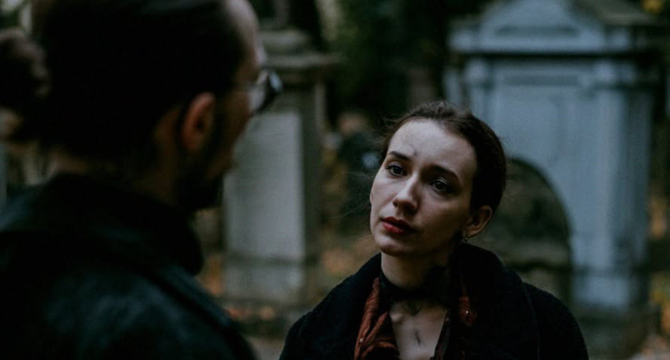
The cemetery sat quiet under a low gray sky, the kind of afternoon that pressed down on your shoulders. I stood at my father Daniel’s freshly turned grave, the oaks behind me shifting in a slow wind. The other mourners had begun drifting toward their cars, their black coats blurring into the hedges.
My cousin Ellie lingered a few steps away, holding her purse against her chest.
“You don’t have to stay out here alone, Sarah,” she said softly.
“I know.”
“He wouldn’t want you catching cold over him.”
I almost laughed. “He wouldn’t want me doing a lot of things.”
She gave me the tired, patient look people give grieving daughters. “He was proud of you. You know that.”
I know what he expected.” My eyes stayed on the headstone. “I never quite reached it.”
“Sarah.”
“It’s fine, Ellie. Go. I’ll catch up.”
She hesitated, squeezed my arm, and walked back toward the gravel path. I listened until her footsteps faded.
My father had been the kind of man people described in single words.
Upright. Disciplined. Honest.
In our small town, his name carried a weight that arrived in rooms before he did. I had spent 34 years trying to be worthy of that weight, and standing there, I still felt watched. Not by ghosts. By him.
I touched the cold edge of the headstone.
“I tried, Dad,” I whispered. “I really did.”
The wind shifted. A twig snapped somewhere behind me, and I turned.
A man was walking up from the tree line. Mid-50s, maybe older, in a worn brown coat that didn’t match the occasion. I had never seen him before in my life. He stopped a respectful distance away and studied me, his hands folded in front of him like he was waiting for permission to speak.
He didn’t answer right away. His eyes moved from my face to the grave, and back.
“You’re Daniel’s daughter.”
“Yes.”
“You look like him around the mouth.” He almost smiled. “He used to set his jaw the same way when he was about to say something he didn’t want to say.”
I tightened my coat around me. “I’m sorry, do I know you?”
“No.” He paused. “But I knew him. A long time. My name’s Raymond. I worked alongside your father, back before you were born. He asked me, if I outlived him, to find you after the burial. He said there were things he kept quiet his whole life, and he wanted you to finally see them clearly.”
“See what?”
He looked at me for a long moment, the way someone looks at a door they have been standing outside for years. Then his voice came, quiet and steady, with something almost tender in it.
“There’s something your father carried that he wanted you to finally understand.”
My breath caught. The words hung in the cold air between us, soft and certain, the way someone delivers news they’ve rehearsed for years.
“Who are you?” I asked.
The stranger said nothing. He stepped closer and reached into his coat pocket.
“I asked you a question,” I said, my voice sharper now. “You don’t get to stand at my father’s grave and say something like that and just walk away.”
He pressed something cold and small into my palm. A rusted pocket watch, the kind men used to carry in vest pockets a lifetime ago.
Open it,” he said quietly. “You deserve to know the truth before I go.”
“The truth about what?”
He didn’t answer. He just looked at me with eyes that seemed tired in a way I couldn’t name.
I almost threw it away. My fingers curled around the watch so tightly I felt the rust bite into my skin, and for one furious second, I wanted to hurl it into the grass and demand he leave.
“My father just died,” I said. “Do you understand that? He was buried 20 minutes ago.”
“I know,” he replied. “That’s why I waited.”
“Waited for what?”
“For him to be gone before I told you.”
I shook my head. Tears burned the corners of my eyes, but they were angry tears, not grieving ones.
“You don’t know him,” I said. “Whatever you think you have. Whatever this is. You’re wrong.”
He took a step back. “Then prove me wrong. Open it. Your mother knows the rest. When you’re ready, ask her.”
He turned and walked toward the tree line.
I stood there shaking. The wind picked up and rustled the flowers laid across the fresh earth, and for a long moment, I just stared at the watch in my hand, hating it.
Curiosity is a cruel thing. It doesn’t ask permission.
I flipped the cover open.
Something small and pale tumbled out and disappeared into the grass at my feet. I dropped to my knees, sweeping the cold blades aside with my fingers until I found it.
A baby tooth. Wrapped in a tiny folded piece of paper, yellowed at the edges.
My hands trembled before my mind caught up. I unfolded the paper carefully, and the moment I saw the writing, my chest tightened.
I knew that handwriting. I had seen it on birthday cards. On grocery lists pinned to the refrigerator. On the inside cover of every book he had ever given me.
It was my father’s.
I couldn’t read what it said. My eyes wouldn’t focus. I turned the watch over, and that was when I saw the photograph pressed against the inside of the lid, faded and cracked at the corners. A young woman holding an infant, smiling at the camera, the way mothers smile when no one else exists in the world.
I had never seen either of them before.
“Wait,” I called out, scrambling to my feet. “Wait, please.”
I turned toward the tree line, the watch clutched against my chest. The path was empty.
He was gone.
I stood there alone in the cemetery, the wind moving through the oaks above me, the photograph staring up from my palm like a question I didn’t know how to ask.
That night, I drove home with the watch in my coat pocket and the taste of a question I couldn’t swallow, knowing the only person left who might have answers was my mother.
I drove home from the cemetery with the pocket watch burning against my palm, the photograph folded carefully inside my coat. The baby tooth sat in a small envelope on the passenger seat. By the time I pulled into my mother’s driveway, I had already rehearsed what I would say.
My mother opened the door in her black mourning dress, her eyes red.
“Sarah, you should be resting.”
“Who is she?”
I held up the photograph. Mom’s face shifted, just for a second, before the practiced calm slid back into place.
“Where did you get that?”
“A man gave it to me at Dad’s grave. He said Dad lied to me. Who is the woman, Mom?”
She reached for the kettle, her hands too steady.
Your father was a good man. Whatever someone told you, it isn’t worth chasing.”
“That isn’t an answer.”
“It’s the only one I have for you.”
I left her standing in the kitchen and sat in the car under her elm, turning the photograph over in my hands. On the back, in pencil so faint I had missed it the first time, someone had written Margaret, 1985.
The following day, I drove to the county clerk’s office and asked how I might track down an obituary for a Margaret who had died somewhere in the surrounding three counties. The clerk recognized my last name and paused with her hand on the desk.
She remembered, she said, because my dad had come in once years ago as
She pointed me to the interlibrary microfilm and left me to it without further questions. The Margaret in the photograph had died nine years ago in the next county over. The obituary listed her full name, the church, and a surviving brother named Thomas, with an address behind a hardware store one town east.
He did not look surprised when he opened the door.
“I thought you might come.”
“Tell me who she was.”
He poured coffee, but neither of us drank.
“Margaret had a boy. Your father was part of his life, in his way. The rest isn’t mine to tell. Ask your mother.”
“He had another child.”
Thomas’s mouth tightened, but he did not answer.
I drove home with my hands locked on the wheel, the pieces arranging themselves into the cruelest possible picture. My father, the man who lectured me about honesty at the dinner table, had walked out of another woman’s life and let her raise his son alone. The man whose disapproving silence had shaped every decision I ever made.
I burst through Mom’s front door without knocking.
“You knew.”
She was sitting in Dad’s chair, the lamp off, as if she had been waiting.